Measurement is comparing an unknown physical quantity with a fixed standard of the same kind, called a unit. Every measurement has two parts: a number (the magnitude) and a unit. In “the book is 22 cm long”, 22 is the number and cm is the unit.
Below I explain fundamental and derived units, the four systems of units (CGS, FPS, MKS and SI), the seven SI base units, SI prefixes and the rules for writing units, then work through unit conversions and finish with practice questions.
| Term | Meaning | Example |
|---|---|---|
| Physical quantity | Anything that can be measured | Length, mass, time, force |
| Unit | The standard a quantity is compared with | metre, kilogram, second |
| Fundamental (base) quantity | Does not depend on other quantities | Length, mass, time |
| Derived quantity | Expressed through base quantities | Speed = length ÷ time |
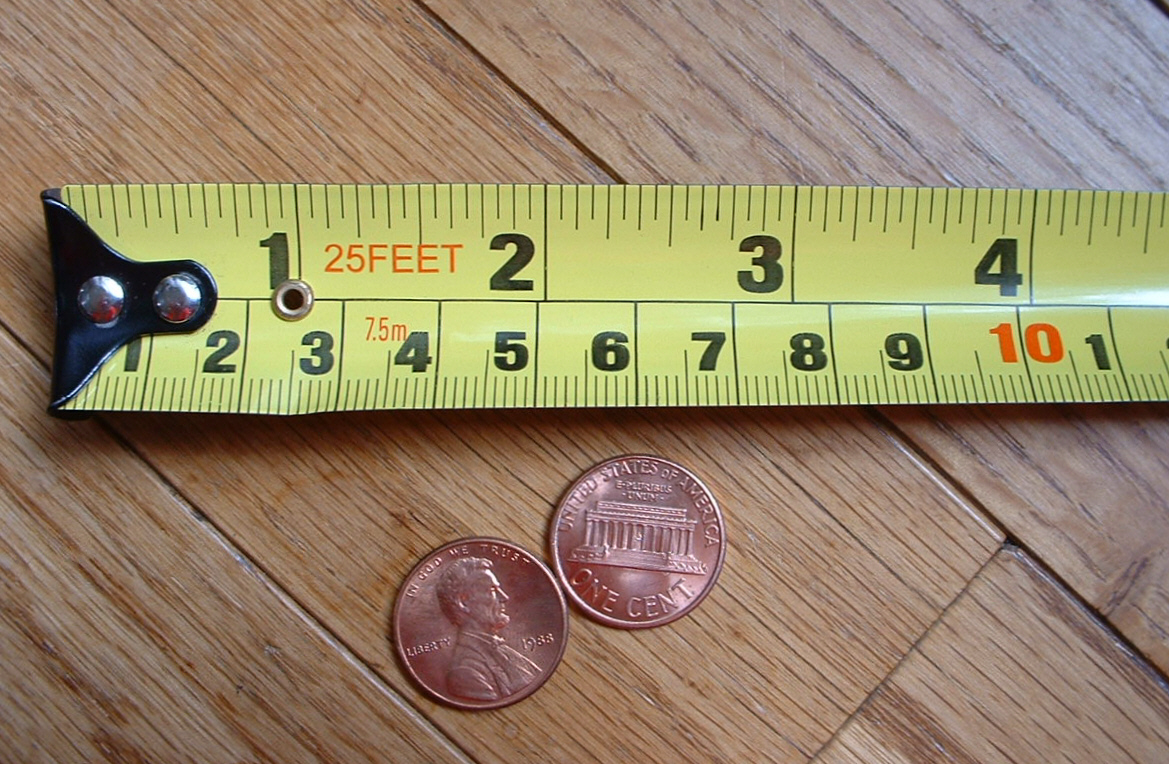
Fundamental and derived units
- Fundamental (base) units measure base quantities and don’t depend on other units: metre (m), kilogram (kg), second (s), and so on.
- Derived units are built from base units. For example, 1 newton = 1 kg m s−2, 1 joule = 1 kg m2 s−2, 1 watt = 1 kg m2 s−3.
- Radian and steradian (plane and solid angle) were once called “supplementary units”. Since 1995 the SI treats them as dimensionless derived units.
Systems of units
| System | Length | Mass | Time | Notes |
|---|---|---|---|---|
| CGS | centimetre (cm) | gram (g) | second (s) | Force in dyne, energy in erg |
| FPS | foot (ft) | pound (lb) | second (s) | British system |
| MKS | metre (m) | kilogram (kg) | second (s) | The base of the SI |
| SI | metre (m) | kilogram (kg) | second (s) | Adopted in 1960; 7 base units; used worldwide in science |
The seven SI base units
| Base quantity | SI unit | Symbol |
|---|---|---|
| Length | metre | m |
| Mass | kilogram | kg |
| Time | second | s |
| Electric current | ampere | A |
| Thermodynamic temperature | kelvin | K |
| Amount of substance | mole | mol |
| Luminous intensity | candela | cd |
Since 2019 all seven are defined by fixing exact values of constants of nature. For example, the metre is fixed by the speed of light (299 792 458 m/s) and the kilogram by the Planck constant.
SI units of common derived quantities
| Quantity | SI unit | In base units |
|---|---|---|
| Area | m2 | m2 |
| Volume | m3 | m3 |
| Density | kg m−3 | kg m−3 |
| Velocity | m s−1 | m s−1 |
| Acceleration | m s−2 | m s−2 |
| Momentum | kg m s−1 | kg m s−1 |
| Force | newton (N) | kg m s−2 |
| Pressure | pascal (Pa) | kg m−1 s−2 |
| Work and energy | joule (J) | kg m2 s−2 |
| Power | watt (W) | kg m2 s−3 |
| Frequency | hertz (Hz) | s−1 |
| Torque | N m | kg m2 s−2 |
| Impulse | N s | kg m s−1 |
| Surface tension | N m−1 | kg s−2 |
| Angular momentum | kg m2 s−1 | kg m2 s−1 |
| Moment of inertia | kg m2 | kg m2 |
| Gravitational constant | N m2 kg−2 | kg−1 m3 s−2 |
For the dimensions of each of these, see the dimensional formulas hub.
SI prefixes
| Prefix | Symbol | Factor | Prefix | Symbol | Factor |
|---|---|---|---|---|---|
| kilo | k | 103 | milli | m | 10−3 |
| mega | M | 106 | micro | μ | 10−6 |
| giga | G | 109 | nano | n | 10−9 |
| tera | T | 1012 | pico | p | 10−12 |
Rules for writing SI units
- Unit names are written in lower case, even when named after a person: newton, joule, kelvin.
- Symbols named after a person start with a capital: N, J, Pa, W. Others are lower case: m, kg, s.
- Symbols take no plural and no full stop: write 10 kg, not 10 kgs or 10 kg. with a full stop.
- Leave a space between the number and the symbol: 22 cm.
Worked examples: converting units
- 72 km/h to m/s: 72 × 1000 m ÷ 3600 s = 20 m/s. (Shortcut: multiply km/h by 5/18.)
- 1 newton in dyne: 1 N = 1 kg m s−2 = 1000 g × 100 cm s−2 = 105 dyne.
- 1 joule in erg: 1 J = 1 kg m2 s−2 = 1000 g × 104 cm2 s−2 = 107 erg.
- Density 1 g/cm³ in kg/m³: 10−3 kg ÷ 10−6 m3 = 1000 kg/m³.
Practice questions
1. Convert 36 km/h to m/s.
2. Which of these are base SI units: newton, kelvin, joule, mole, ampere?
3. The density of mercury is 13.6 g/cm³. Write it in SI units.
Frequently asked questions
What is a unit in physics?
How many base units are there in the SI?
What is the difference between fundamental and derived units?
Are the radian and steradian base units?
Related